What your collection tells you about itself (and you)
Vinylist analyzes your collection in six categories, with more than 50 cards and charts. Every figure counts each copy you own – three copies of an album count as three.
In the Statistics Editor you show what interests you and arrange it the way you like.
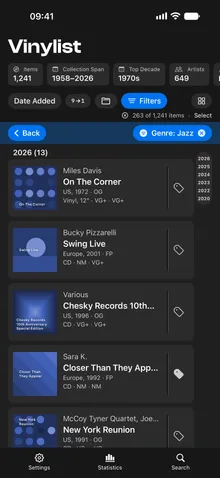
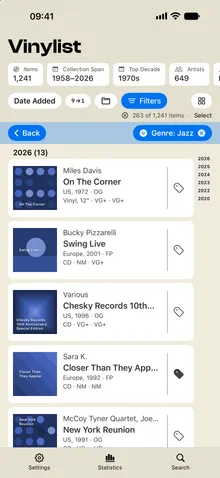
Tap instead of search
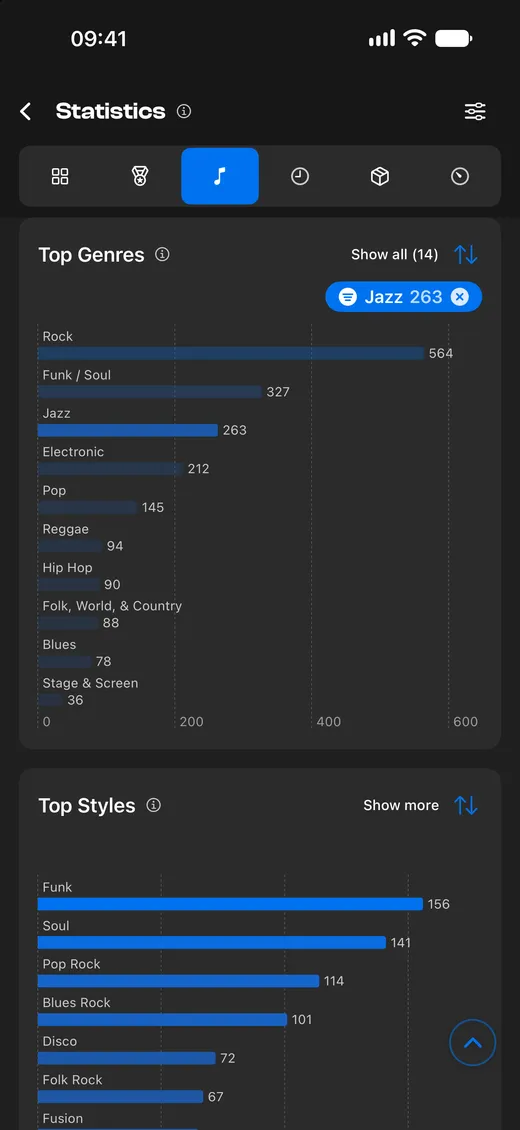
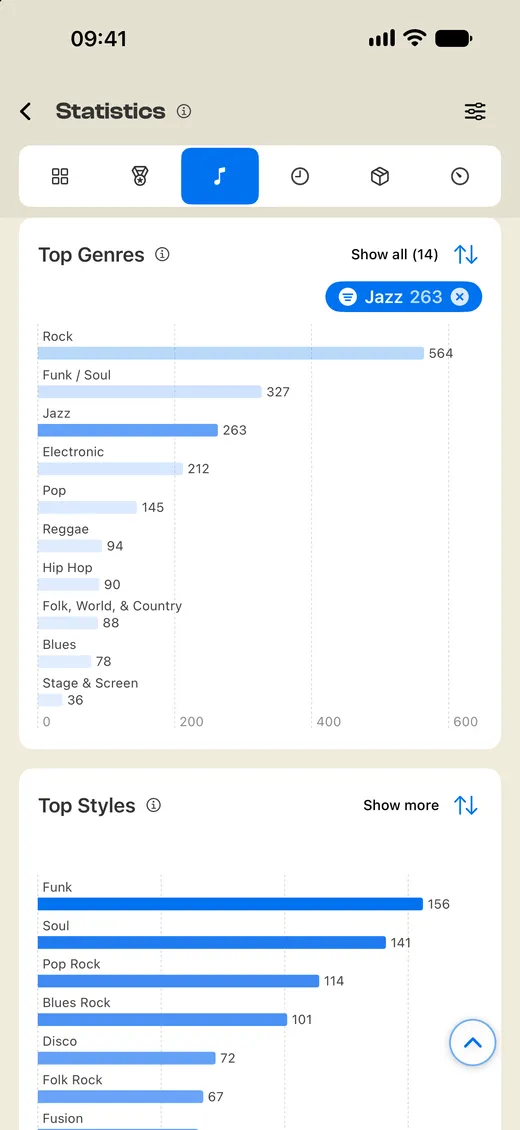
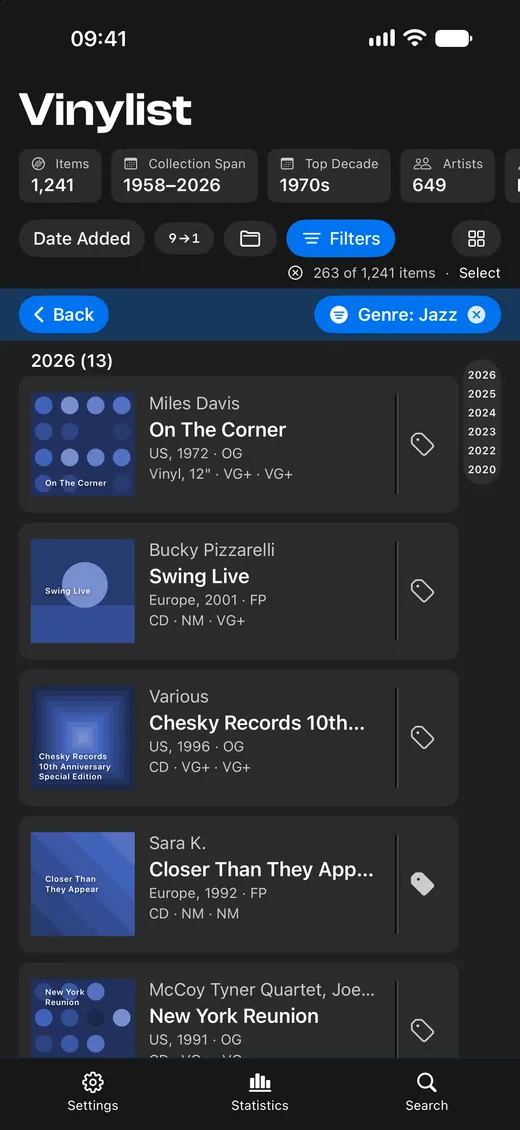
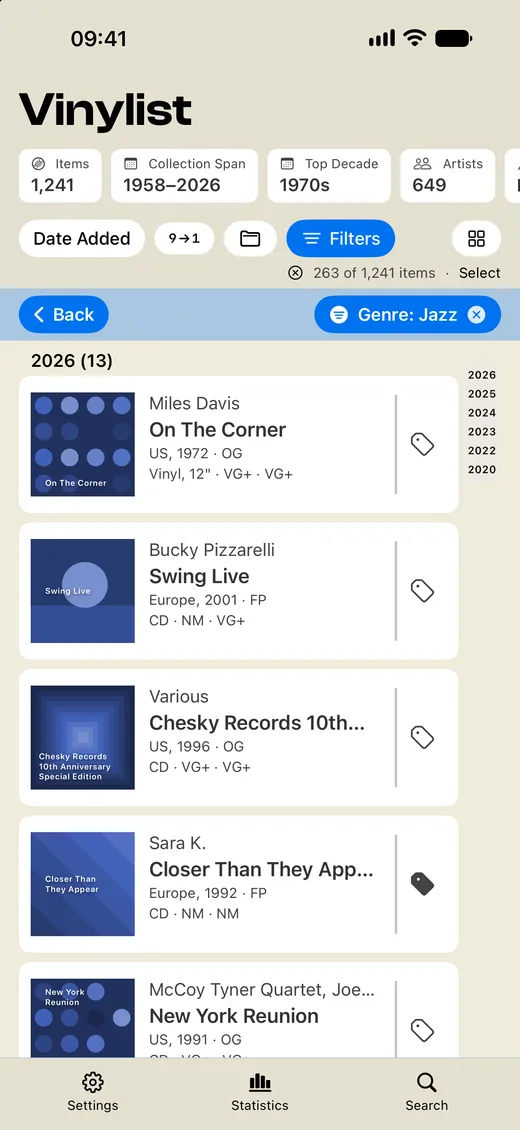
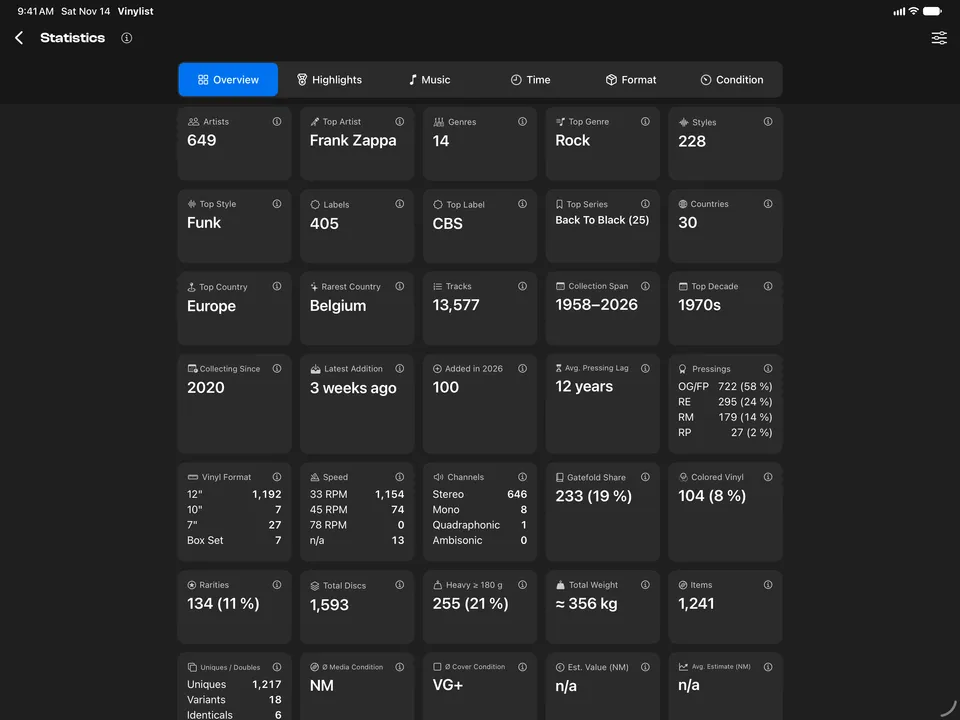
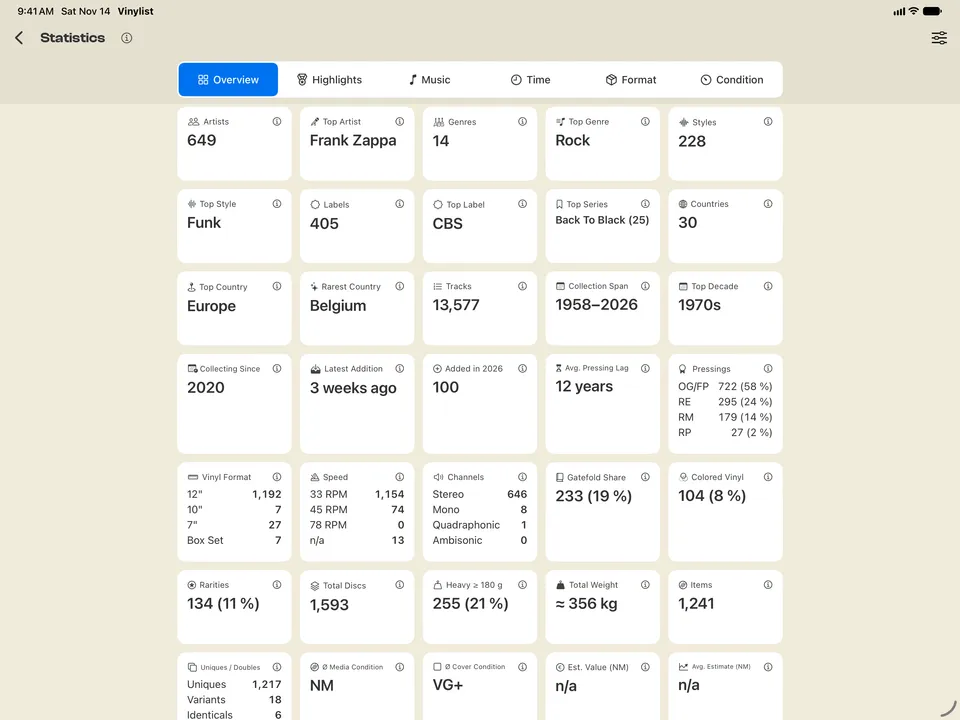
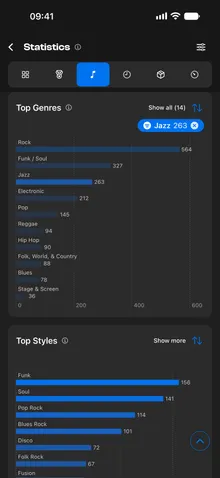
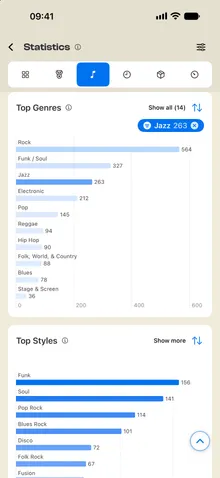
Almost everything in the statistics can be tapped. A card jumps to its chart. A bar or a pie slice gets marked, and a tap on the tag above it shows you exactly those records in your collection – filtered, with a pill at the top that you can remove at any time.
That turns the statistics into a new way of walking through your own collection: What came from Japan? Which records are still Near Mint? What was pressed in the seventies? Two taps instead of a search – and “Back” lands you on the same chart.
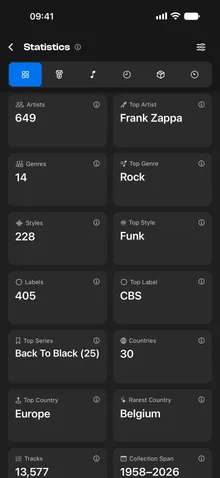
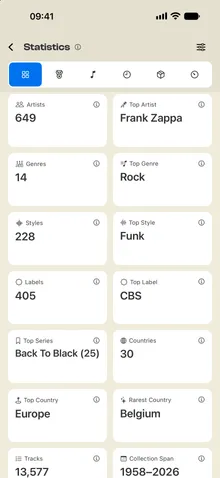
Overview
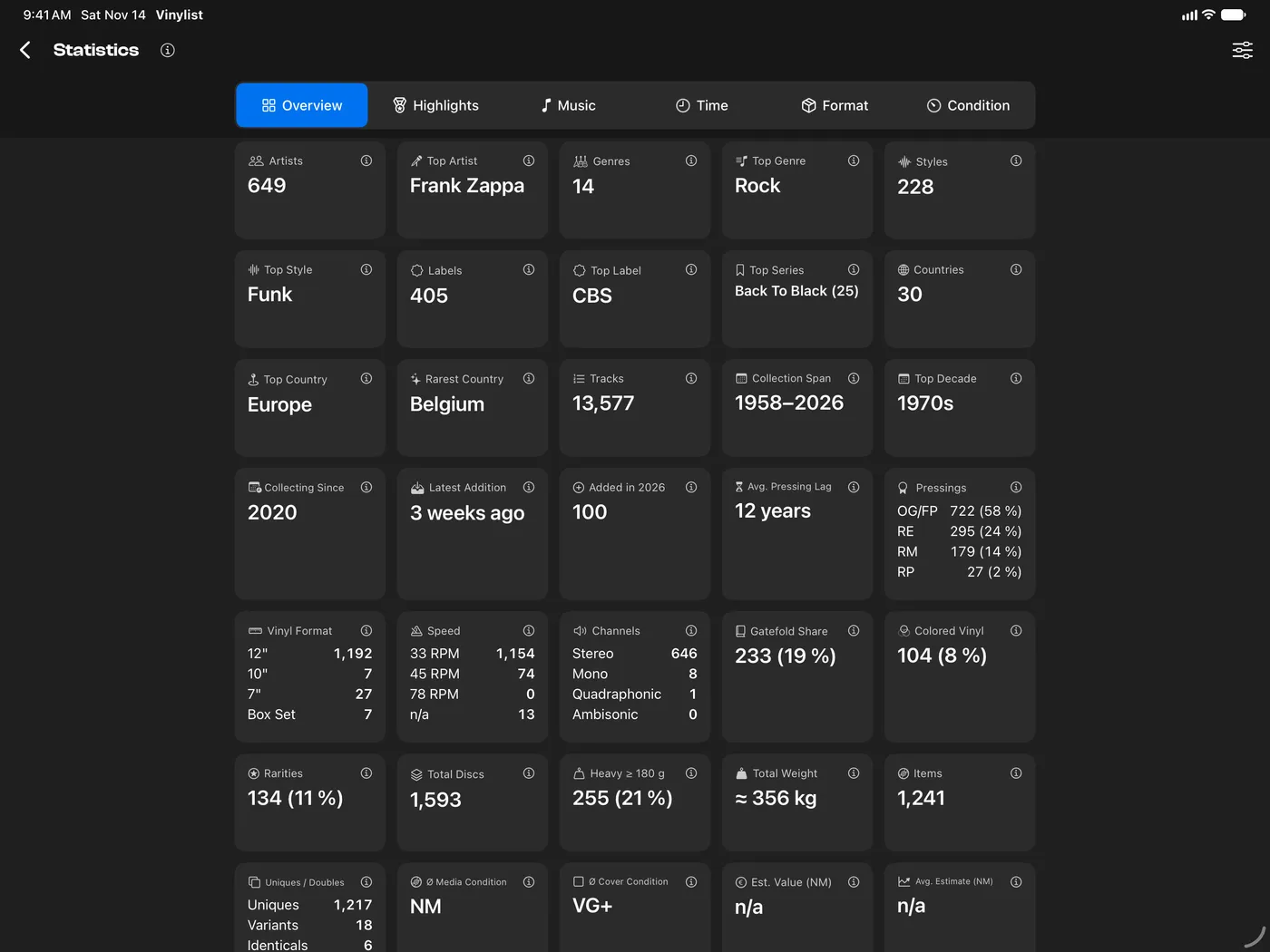
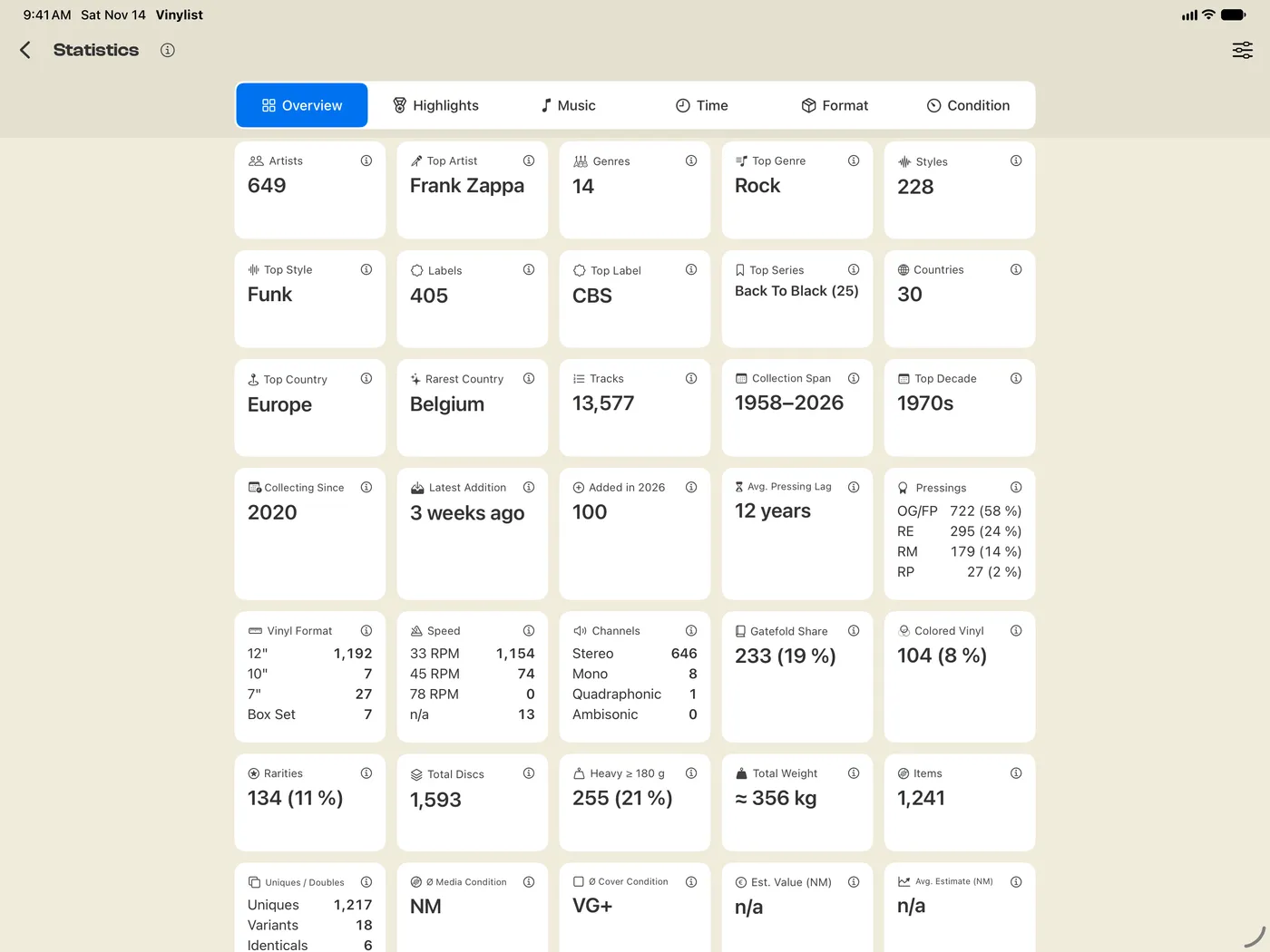
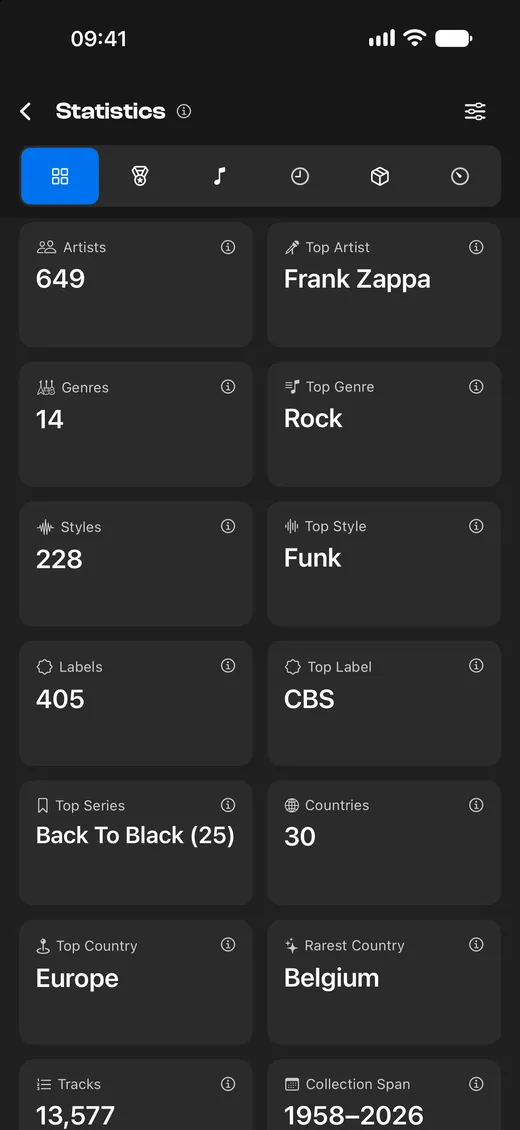
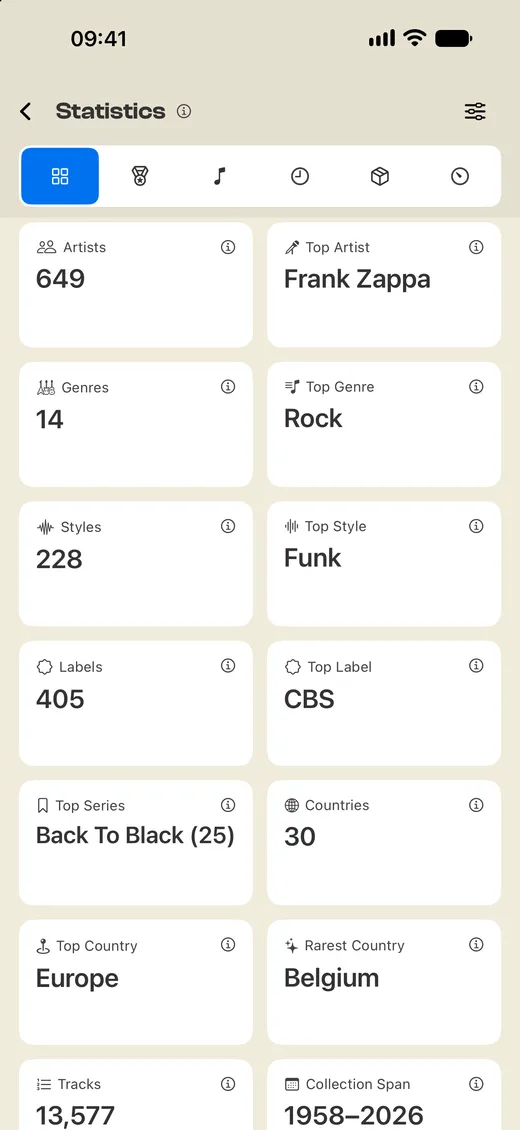
The cards at the very top: how many artists, genres, labels and countries, who leads in each, when you started collecting and what the collection is worth. Tapping a card jumps to its chart.
Highlights
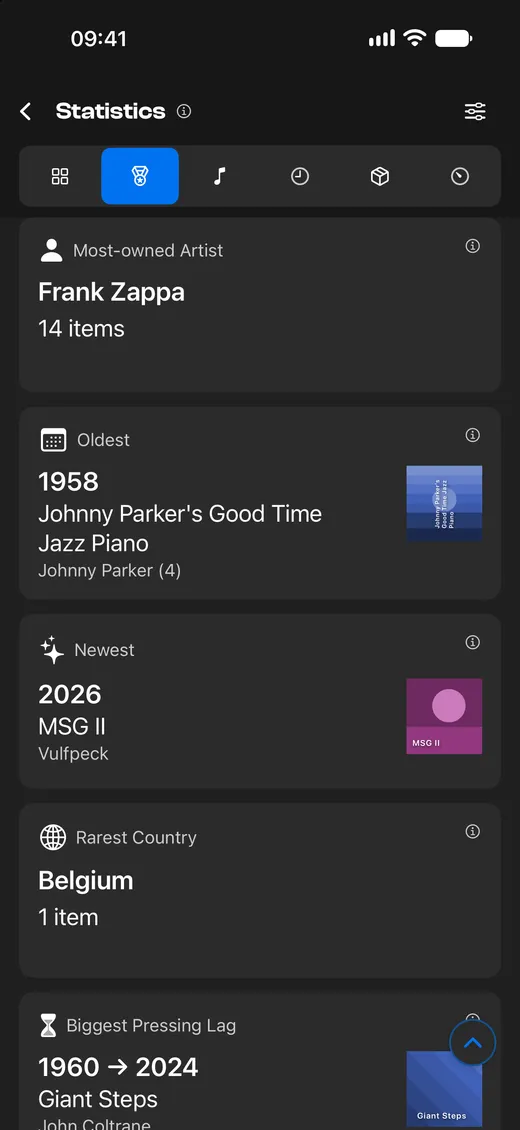
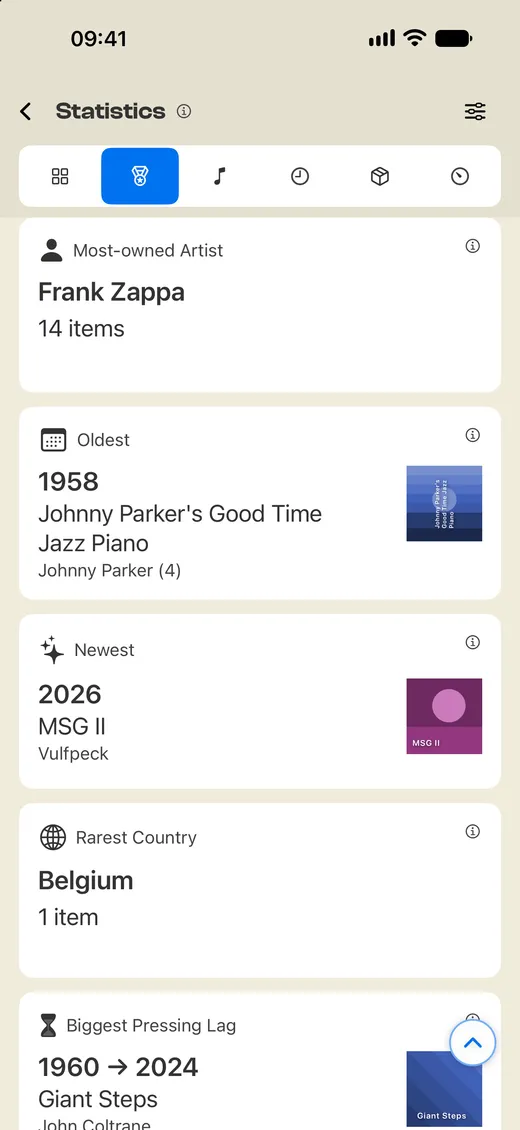
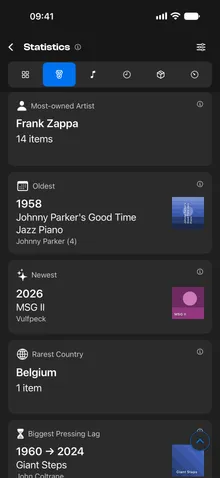
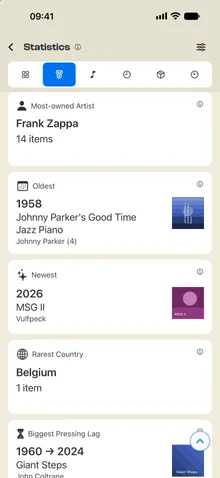
Standouts instead of bars: your most valuable record, the artist you own most, the oldest and the newest, the rarest release country – and the pressing furthest from its first release. Plus your top ten by value, by date added or by year.
Music
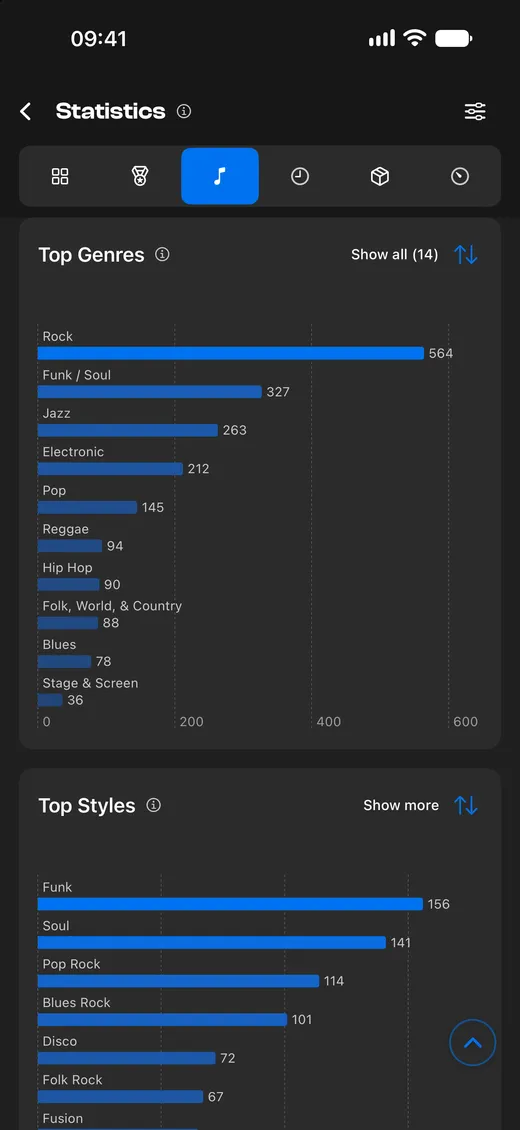
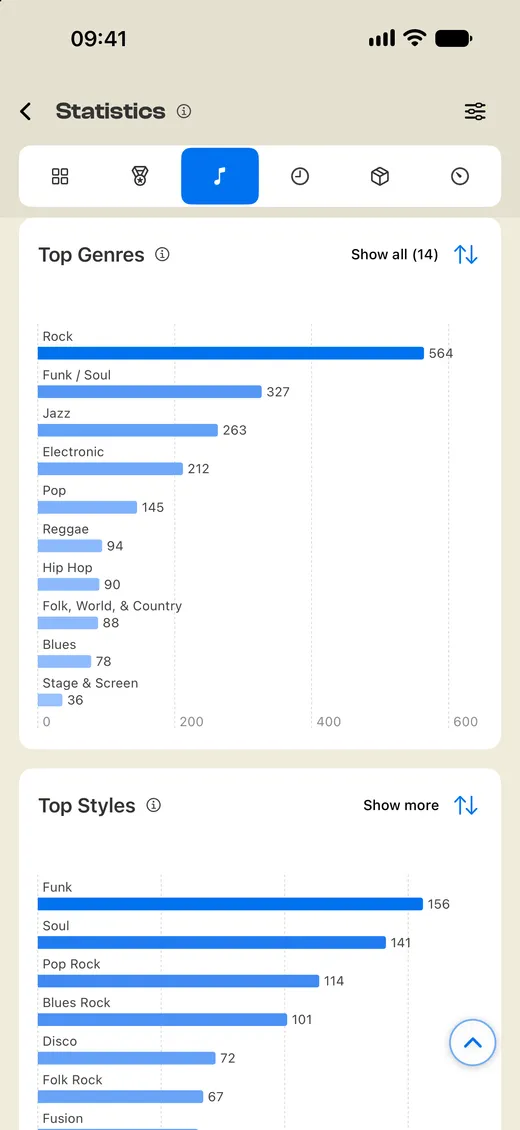
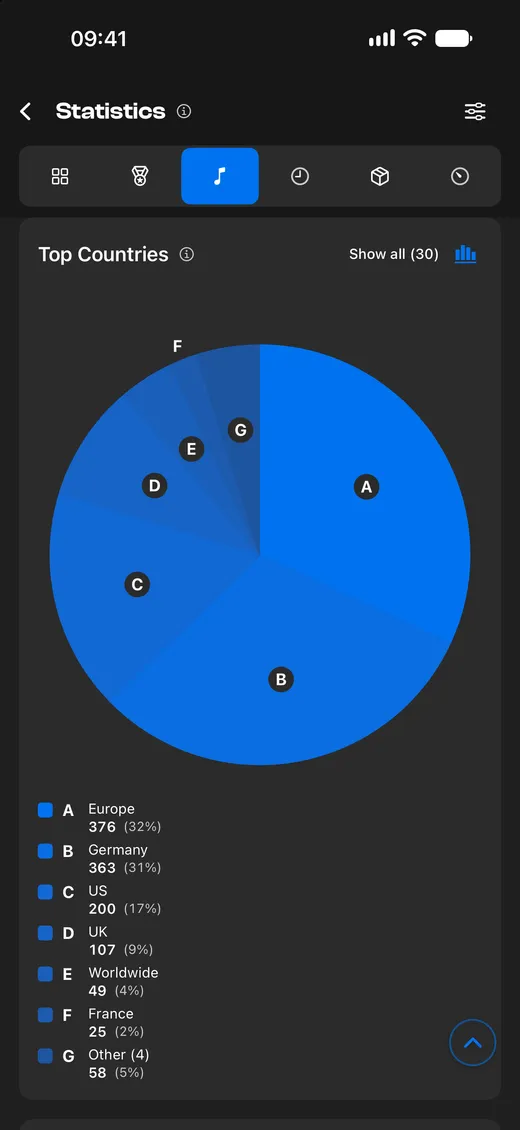
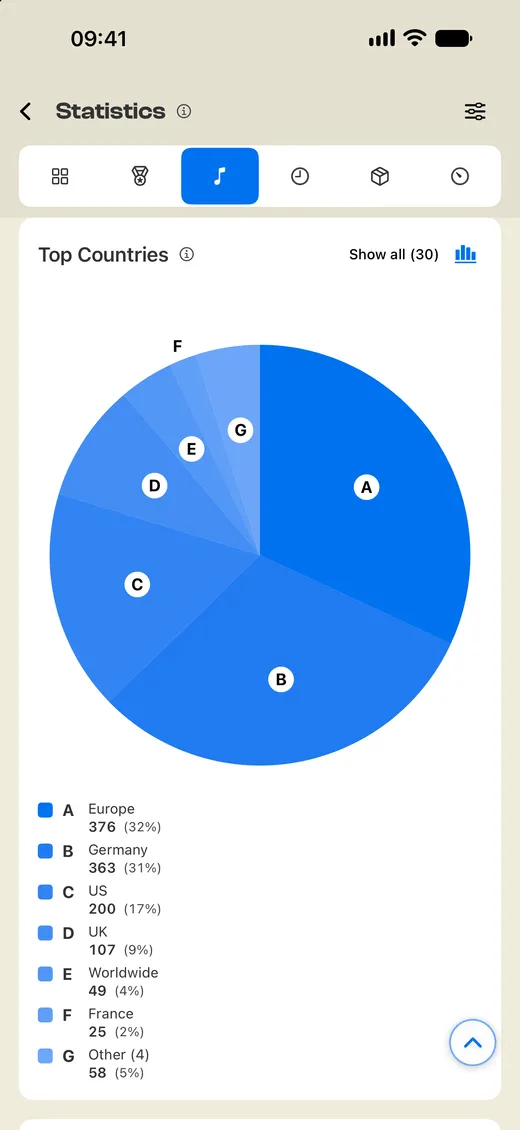
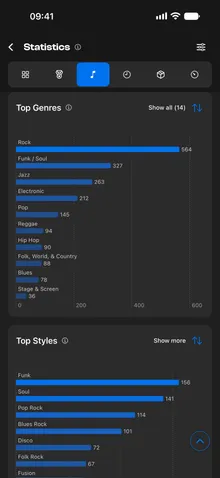
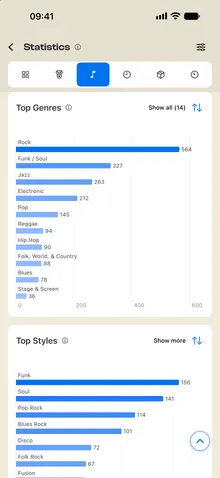
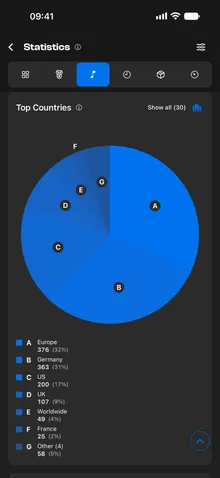
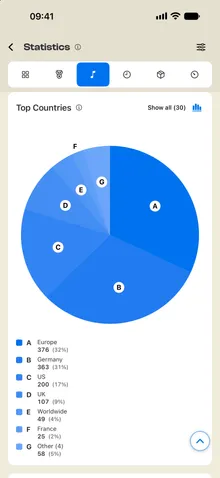
Artists, genres, styles, labels, series and release countries as rankings – the release countries also as a pie, if you like. Plus how many tracks your records hold, from a single to a box set.
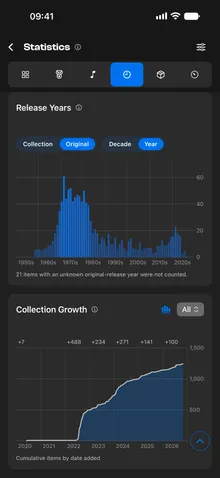
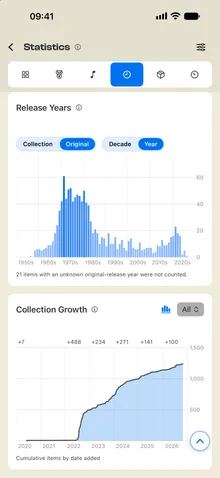
Time
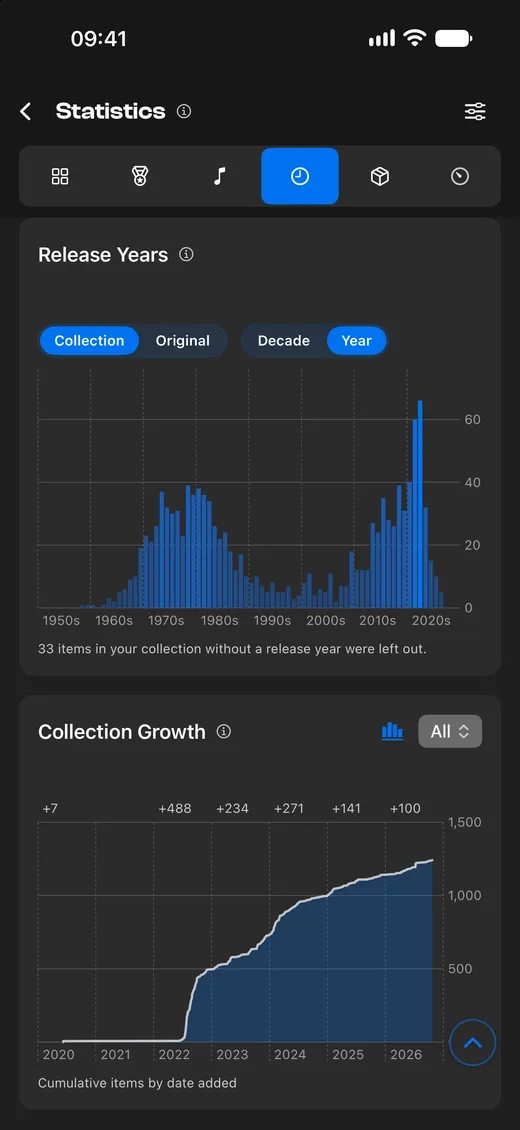
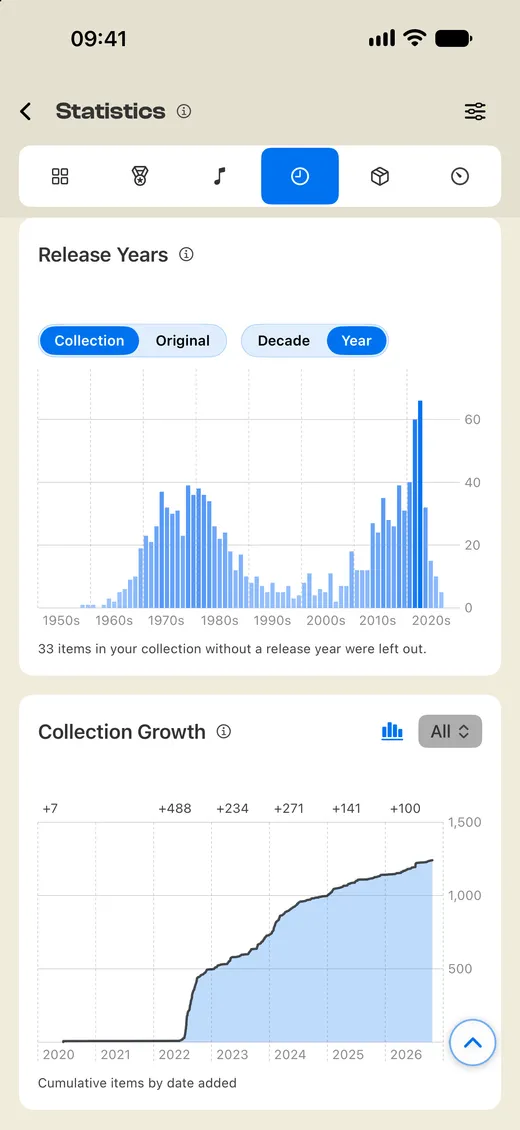
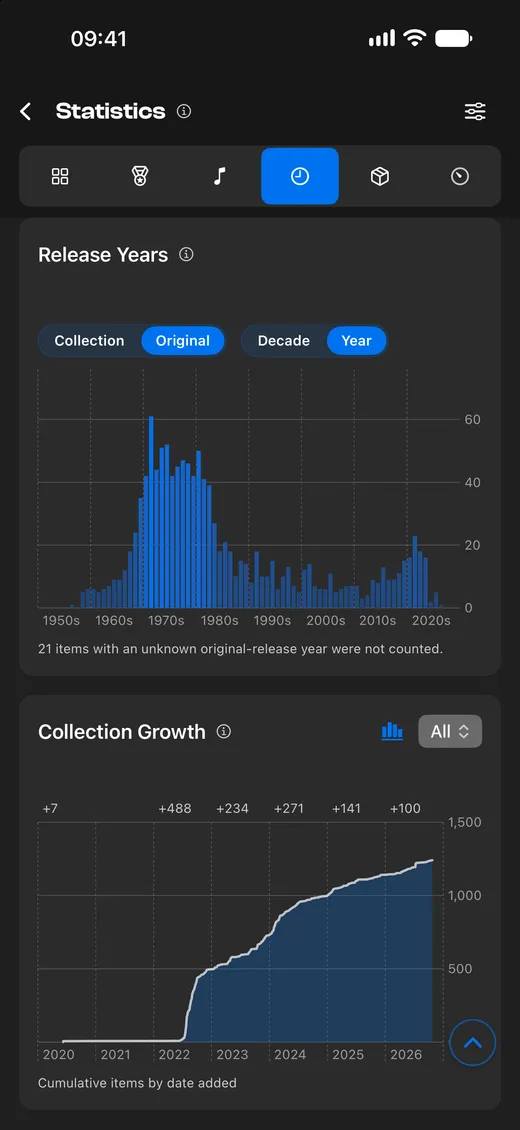
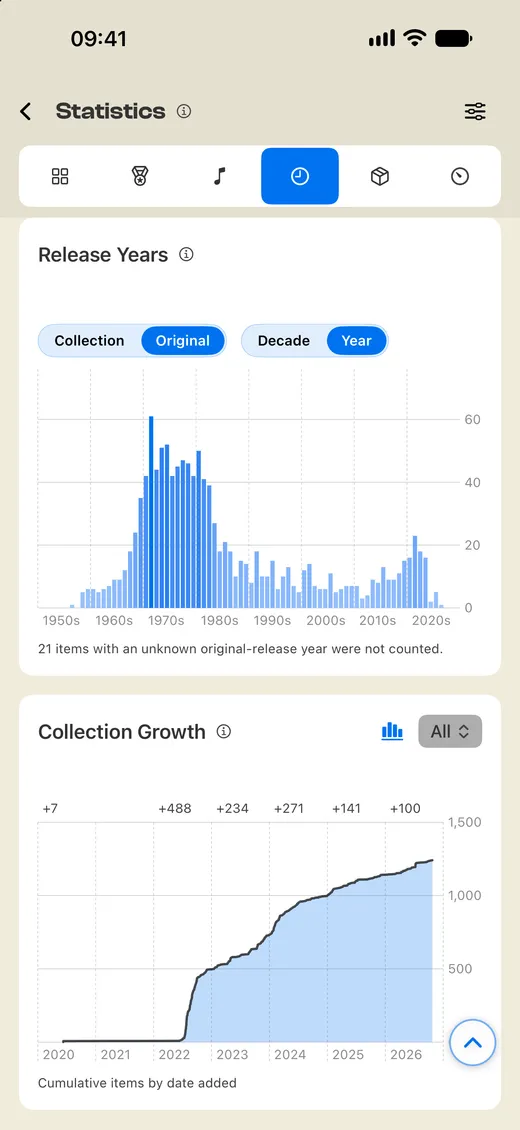
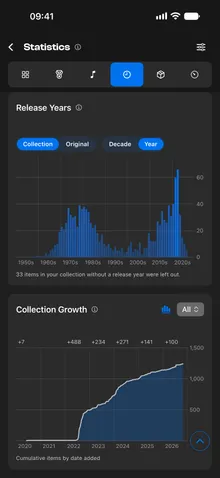
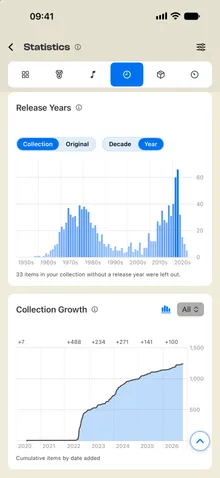
Your records by decade or – as here – year by year. Once by the year your copy was pressed (“Collection”), once by the year the work first came out on that medium (“Original”).
Side by side, the two show how your collection is built: if the “Original” bars sit further left, you have reissues of works that came out on that medium earlier; if they match, these are first editions of their time. Plus how your collection has grown over the years.
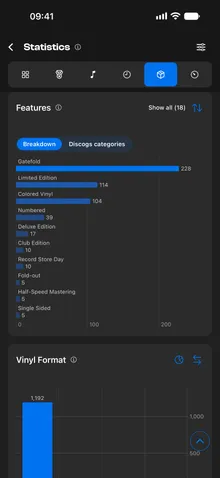
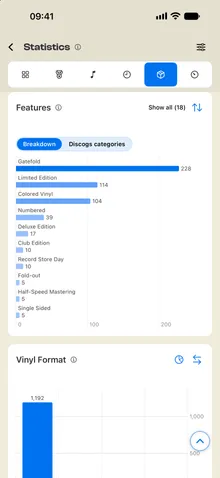
Format
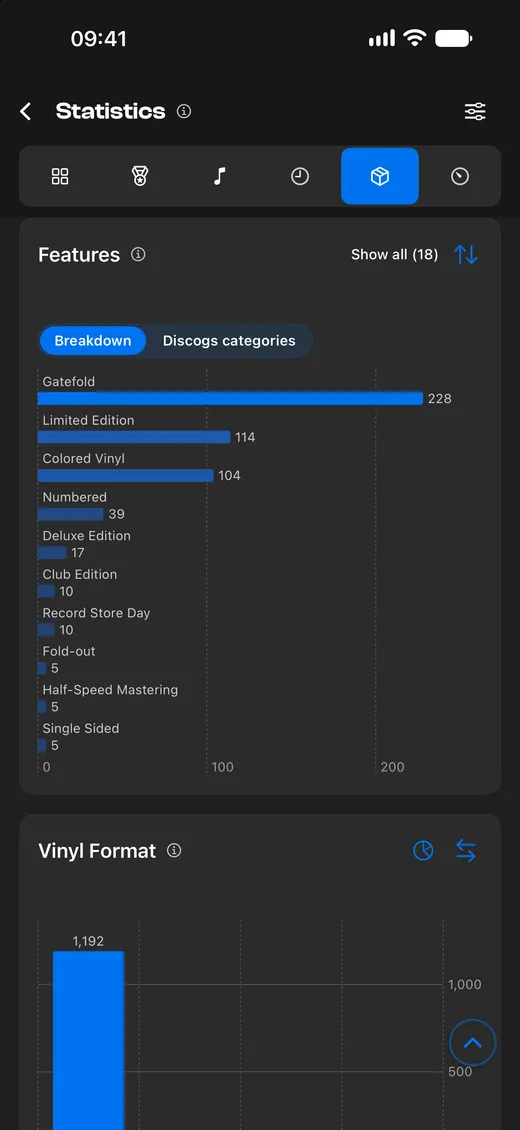
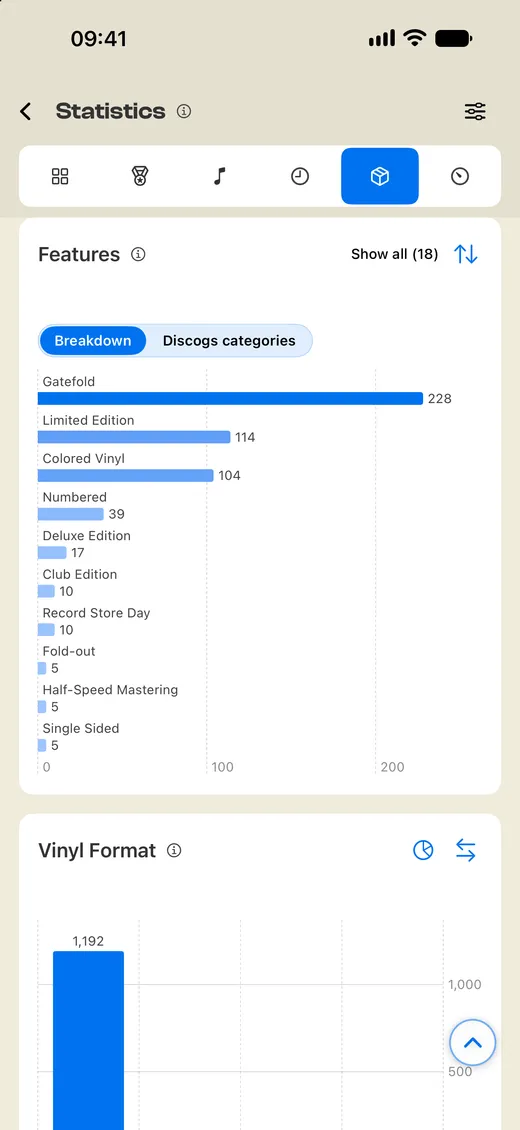
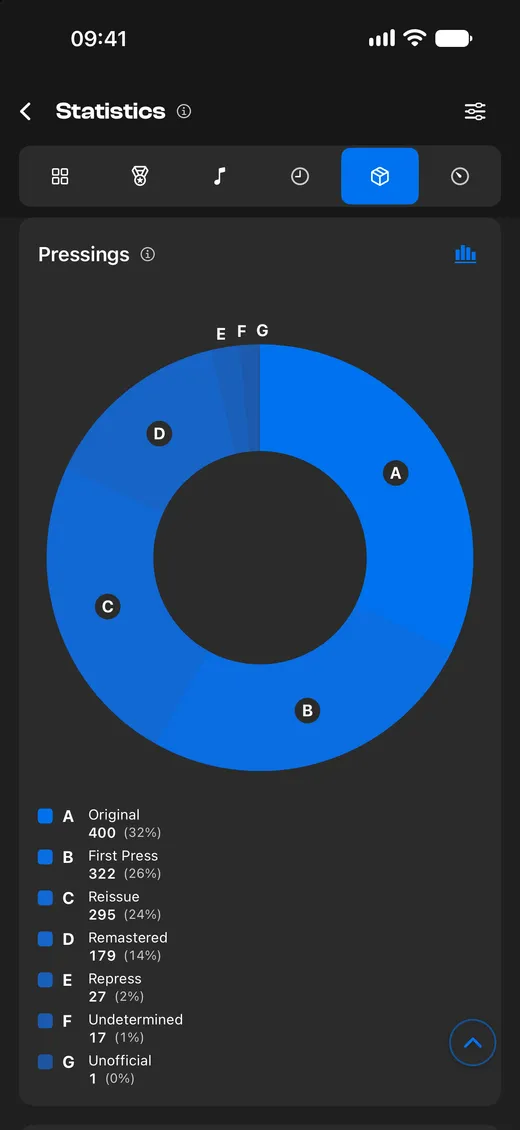
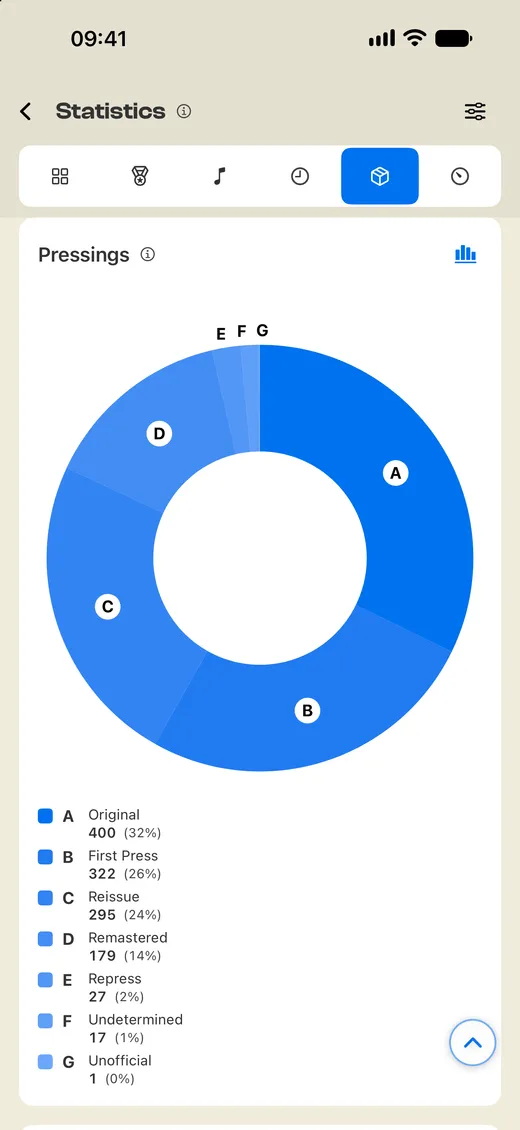
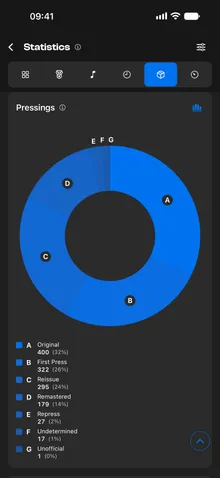
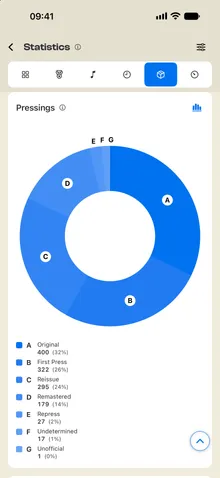
Media and release types, features like Gatefold, Limited Edition or Colored Vinyl, plus format, speed, mono or stereo and weight – and the pressing stage.
Format
Which pressing do you really own?
Every record gets exactly one pressing stage. Discogs' own marks come first; otherwise Vinylist compares the pressing with every other pressing of the same work on the same medium.
- Original
- The earliest pressing in the artist's home country – the UK for the Beatles, Sweden for ABBA.
- First Press
- The first pressing in any other country.
- Reissue
- A reissue, as Discogs marks it.
- Remastered
- A reissue with new mastering, as Discogs marks it. A remastered reissue counts here, not as Reissue.
- Repress
- A later run: Discogs marks it so, the format text names a later pressing (“2nd Pressing”), or the same country already had a pressing with the same catalog number.
- Unofficial
- An unofficial pressing, as Discogs marks it.
- Undetermined
- When nothing can be said for sure, Vinylist doesn't guess.
The artist's home country comes from Wikidata. If it is unknown or has no pressing there, the earliest pressing anywhere is Original. If Wikidata names several countries, the country of birth counts when it is among them, otherwise each of them – the Bee Gees are Original in both the UK and Australia.
Condition
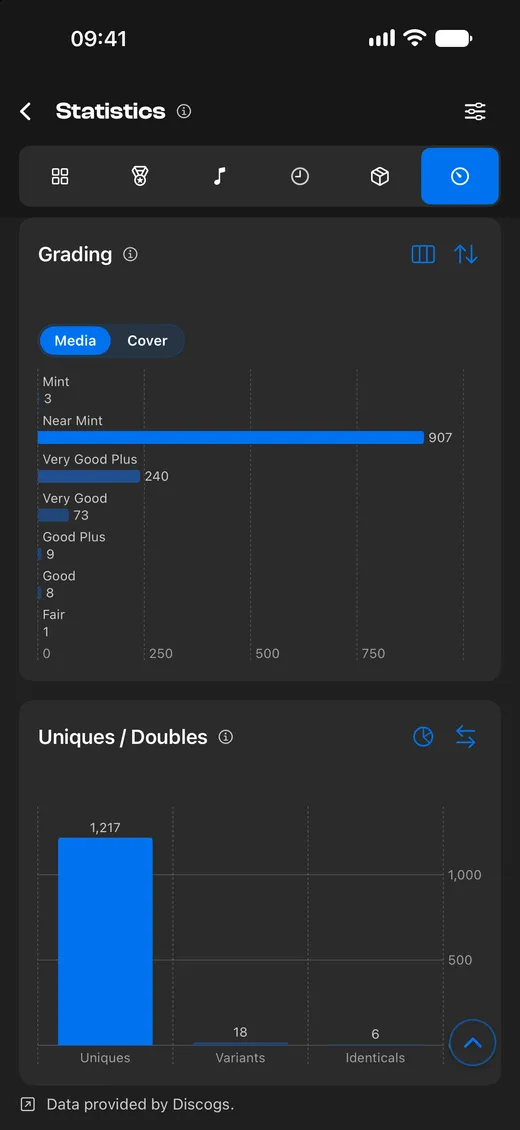
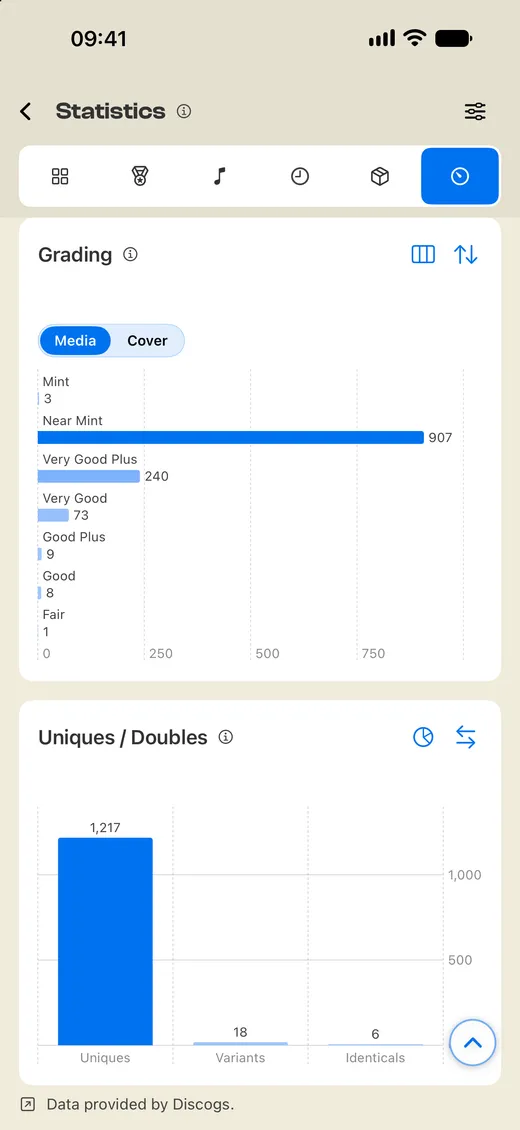
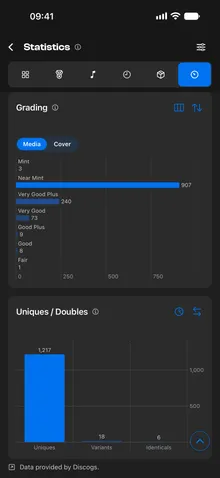
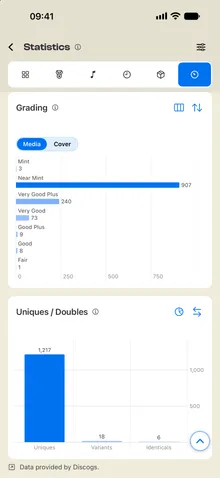
Your records by Goldmine grade from Mint to Poor, separately for media and cover. Plus what is unique, what you own as a variant or more than once – and what the collection is worth by Discogs' price suggestions.
Prices and value: Vinylist shows the Discogs estimate for a Near Mint copy – an orientation, not an offer. Discogs only supplies it once the seller settings in your Discogs account are filled in; until then prices and value stay empty, and everything else works as usual.
Behind every statistic, an ⓘ in the app explains what it shows and how it is counted.